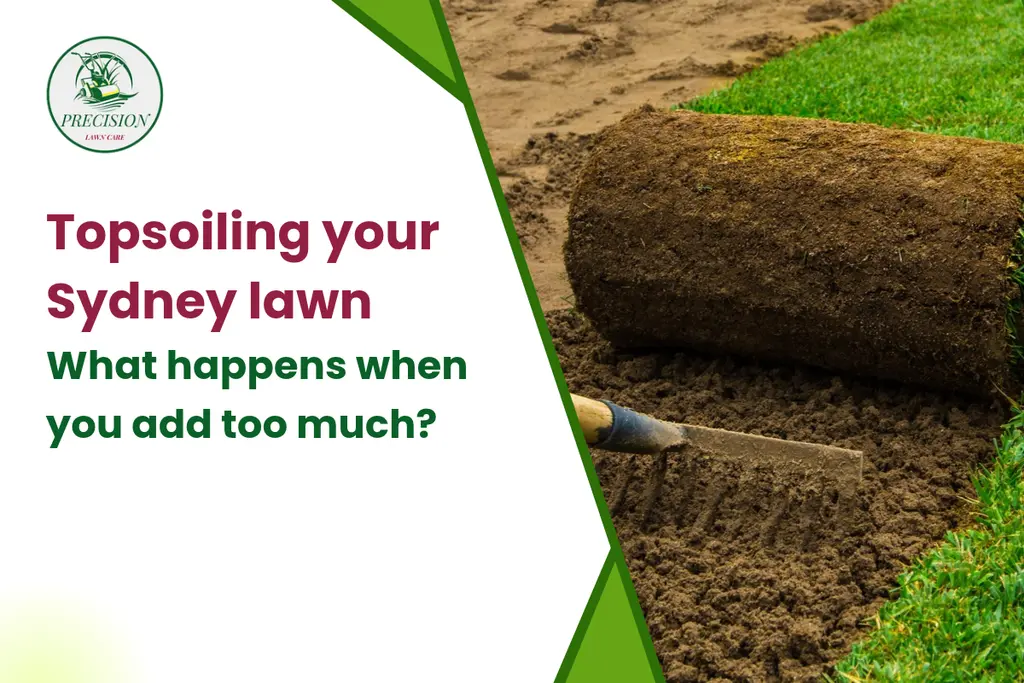
Adding too much topsoiling can suffocate your lawn rather than improving the soil. Many homeowners intentionally apply more topsoil due to the “more is better” assumption, but it can severely damage the landscape. One of the most common mistakes homeowners make while maintaining their lawns is applying topsoil without understanding the correct application method. When you add too much topsoil, it can bury existing plants, restrict root growth, disrupt drainage, and create other problems. In this blog, we take a look at lawn topsoiling in Sydney and everything you need to know to create a healthier, thriving landscape.
Is topsoiling the same as top dressing?
Topsoiling and top dressing are not the same and are applied for different reasons. Topsoiling is spreading a layer of quality soil over an existing lawn or soil surface. It is done to fill gaps, raise low areas, level the surface, and improve soil structure. Topsoiling is for improving the soil beneath the grass to create a new base for turf or prepare your lawn for renovation. Conversely, topdressing is a thin layer of sand or suitable sand blend spread across the landscape to level uneven surfaces and support turf growth.
What are the risks of applying too much top dressing?
Poor drainage
Too much soil can block the flow of water through the soil and create waterlogged areas. New soil and its texture can disrupt how the lawn functions, and water may not pass through the grounds.
Root suffocation
Adding a thick layer of soil can restrict nutrients, water, and oxygen from reaching the root and make it suffocate. When it’s harder to breathe, the root health deteriorates.
Plant burial
Soil can bury the crowns, stems, or lower portions of plants. These are not meant to be covered with soil, and topsoiling should work against the lawn.
Soil compaction
Compacted soil can become a major issue for your Sydney lawn, especially when walked or driven over. Compacted soil is stiff and has fewer air spaces.
Uneven settling
Topsoil is added to level surfaces, but after rainfall and watering, the ground can become uneven and leave gaps. Therefore, the application method matters.
Nutrient imbalance
Homeowners may think adding more soil means more benefits, but it’s completely incorrect. Topsoil is quality soil that improves turf growth and must be added in limited amounts to allow nutrients to reach the roots more effectively.
Tree damage
Raising the surface level can damage existing trees in your lawn. Trees’ lower trunks are important, and covering those parts is highly risky because it blocks oxygen and nutrients.
Increased costs
Topsoil must be added in moderation; if not done so, you have to face unexpectedly higher maintenance costs due to excess topsoiling. You may need to fix drainage, remove soil, add more plants, and do other work.
How much topsoil should you add to an existing lawn?
For an existing lawn, a thin layer of topdressing will work better than a thick layer or topsoiling. Since a normal lawn outside a residential/commercial landscape thrives on minimal maintenance and resources, a layer of topdressing can improve growth.
For established soil, the recommended amount is 5-10 mm, as the goal is to allow plants and trees to thrive and not block oxygen and nutrients. A thick layer can easily bury the grass and stress out the turf; therefore, a thin layer is usually advised.
If you are looking to level the surface, 10-15 mm of material can create a smooth ground to walk or mow. Sydney lawns have sandy and clayey soil; the recommended amount can vary; a professional assesses the lawn to determine the exact amount.
For new lawn installation, 75–100 mm of prepared soil can establish a new turf area. Lawn topdressing in Sydney must be done after assessing the lawn condition.
When is top dressing a better option?
Lawn Topdressing in Sydney is a better option when you have minor issues and are looking for a budget-friendly alternative to topsoil and demand less intensity; not every lawn requires topsoil, as it is relatively heavy.
Here is why you should choose topdressing:
- Minor surface unevennesses
- Improve soil quality
- Boost turf health
- Poor drainage
- Handle thatch
- Promote healthier grass growth
Topsoiling vs Topdressing: The difference
| Factor | Topsoiling | Topdressing |
| Purpose | Build or improve soil health | Level the surface |
| Application depth | Thicker | Thin |
| Weight | Usually heavier | Lighter |
| Established lawn | Not necessary | Compatible |
| Cost | Higher | Reasonable |
| Labour | Labour intensive | Easy to apply |
| Drainage | Affects the flow of water | Change the soil conditions |
| Best for | Set a new lawn | For minor issues and lawn improvement. |
How professional care helps you restore the lush lawn
If your lawn is struggling and looks patchy and uneven, then regular maintenance may not help to restore your lawn. This is where professionals come in. They assess the lawn to determine the actual cause and suggest the best solution to combat the issue. In some cases, topsoiling may not be the appropriate solution. Professionals check whether your lawn actually needs topsoiling/topdressing.
For lawn top dressing in Sydney, also consider soil type, structure, grass type, and lawn conditions to choose the best material and complementary services if required. They address drainage issues, support grass growth, and correct uneven areas.
Conclusion
Lawn improvement is not a one-time process but a continuous effort. Regular watering, mowing, fertilising, aeration, and topdressing can keep the lawn looking fresh season after season.
At Precision Lawn Care, we are committed to recommending the best treatment for your landscape, so it can thrive.
FAQs
- Can you add topsoil to an existing lawn?
Yes, you can add topsoil to an existing lawn. However, topsoil is heavier and usually applied in moderation to prevent drainage and root suffocation.
- What can I do to restore my lawn?
Topdressing is one of the ways to restore your lawn. It helps to improve soil health, improve turf, and make daily maintenance more effective.
- What are the potential consequences of adding too much topsoil to a lawn?
Poor drainage, root suffocation, plant burial, and nutrient imbalance are the potential consequences of adding too much topsoil.
- How much topdress do I need for my lawn?
The recommended amount is 5-10 mm or topdress for an existing lawn.
- What are the things I can do to maintain my lawn?
Effective watering, fertilisation, and occasional topdressing can be beneficial for your lawn.